Watch resellers — Chrono24 sellers, eBay top-rated, private dealers — face the same operational problem: every consignment needs to be authenticated and priced before it can be listed, and the volume makes any process that takes more than three minutes per piece a non-starter. This is the workflow most of them end up with.
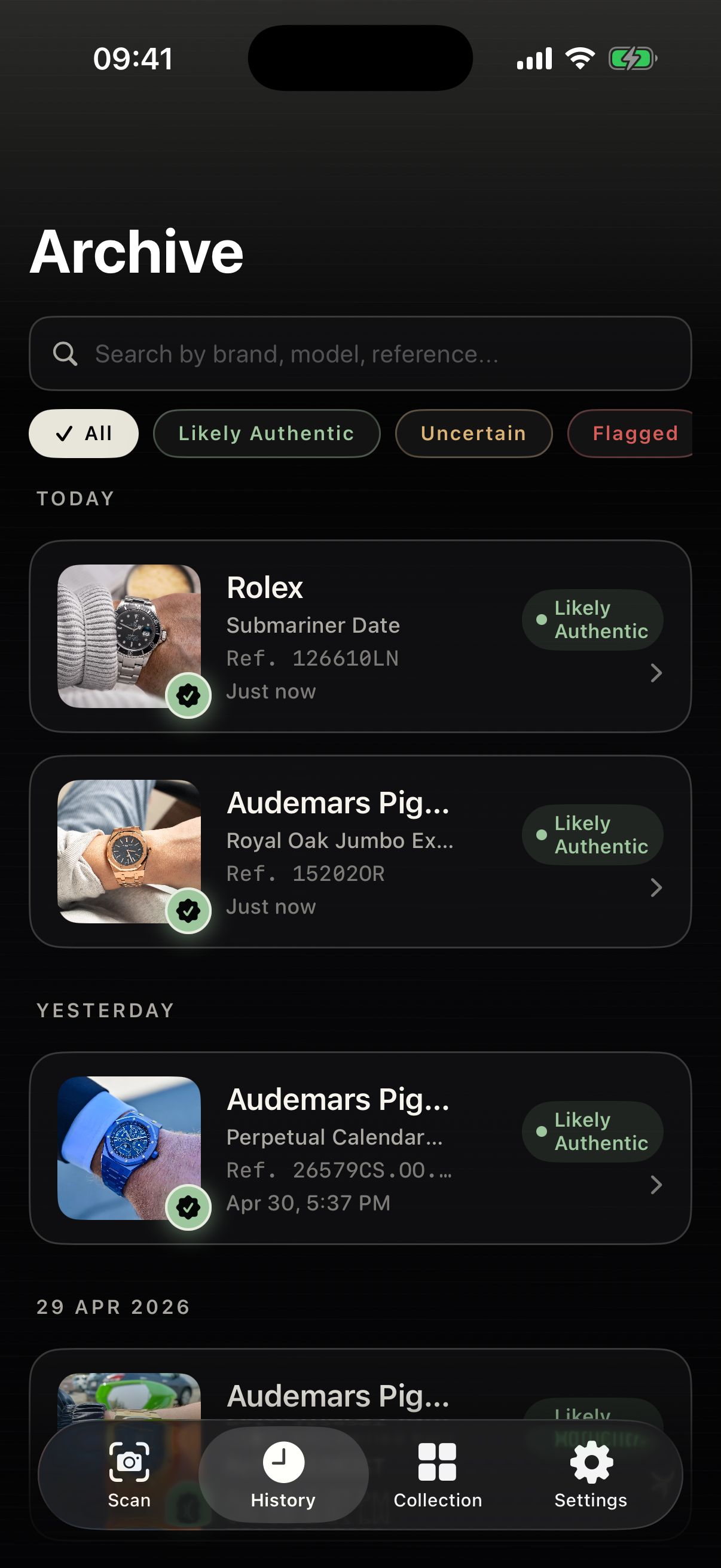
Archive view — every consignment, searchable, with full dossier history.
The reseller workflow, end to end
Intake. Photograph the consignment in the standard five WatchRadar angles — dial, bezel, crown, case, finishing. Two minutes per piece. Run the scan.
Triage. Likely Authentic listings move to pricing. Uncertain pieces get pulled for in-person inspection. High Risk pieces get refused at intake before you take possession.
Pricing. Use the WatchRadar market-value estimate (low / typical / high band) to set asking price. The dossier shows the asking-price fairness band so you can defend the listing price during negotiation.
Provenance attach. Photograph the box, papers, service log and receipt and attach to the dossier. The certificate references all attachments by hash.
Certificate. Issue an Authenticity Certificate. Buyer-shareable URL with a verification QR — embed it in the listing image gallery on Chrono24, eBay, or your own listings.
Archive. Every dossier is searchable in the Watch Box. When the same buyer comes back six months later, you have the prior verdict on file.
Why a recent dossier closes deals faster
On Chrono24 and eBay, the buyer’s objection sequence is predictable: is it real, is the price fair, what about the service history. A WatchRadar Authenticity Certificate published with the listing addresses the first two before the buyer even messages you. The dossier links to a public verification page; the buyer can scan the QR code and confirm the certificate independently. Resellers using this approach typically report 20–40% shorter time-to-close on listings with attached certificates compared to listings without.
Volume and pricing
WatchRadar is free on the App Store with a per-certificate fee for issuance. The economics work for resellers because the certificate fee per consignment is a fraction of the average commission per sale, and the close-rate improvement more than covers it. For high-volume operations (100+ consignments per month), contact the team for volume pricing.
Frequently asked questions
Can I batch-process 50 watches in one session?
The five-angle scan has to be done per watch — there is no way around the photography step. But the rest of the workflow (triage, pricing, certificate issuance) is fast enough that experienced resellers process 30–40 pieces per hour once they have a setup that holds the watch in the right pose.
Is the certificate accepted by Chrono24 / eBay listing systems?
You attach the certificate URL or the certificate PDF to the listing the same way you would any other document. Chrono24, eBay and the major auction platforms all support attached documents. The QR code resolves to the public verification page, so the buyer can confirm the certificate without taking the seller’s word for anything.
What happens if a buyer disputes the WatchRadar verdict after sale?
The certificate is timestamped, photographed, and tied to the watch’s reference and serial. If the buyer disputes the verdict, the dossier shows exactly what was inspected and how each region scored. Most disputes are resolved by reviewing the original dossier — the photos at the time of inspection are unambiguous evidence.
Can I run WatchRadar before I take possession of the watch?
Yes — and this is a recommended workflow. Ask the consignor to send you the five required angles (or pull them from their listing if it is on Chrono24 / eBay). Run the dossier, get a preliminary verdict, then commit to the consignment only if the verdict is Likely Authentic. This avoids taking possession of pieces you would refuse anyway.
Does the dossier include grading or condition notes?
WatchRadar focuses on authenticity. Condition grading (light scratches, polished case, dial age) is adjacent to authentication but separate — for that, the inspection-diagram step in the dossier surfaces visible cosmetic notes you can copy into your listing description. Formal condition grading on a 1–10 scale is on the roadmap.