
Start with the exact reference
Value attaches to a reference, not to a model name. Two watches both called “Submariner” can be decades and a very wide price gap apart, and within a single reference a dial variant or a different metal can move the number again. Before you look at any prices, pin down the reference and, where it matters, the dial and bracelet variant.
If you do not know it, our guide to finding your watch’s reference and serial number goes brand by brand, or the AI watch identifier can suggest one from photos, with a confidence level. For a Rolex, the serial chart gives an approximate production year, which matters a great deal on vintage pieces.
What drives a watch’s value
Brand and reference
Demand is concentrated. A relatively small number of brands and references hold or gain value on the secondary market, while many excellent watches trade well below their original retail price. The reference sets the baseline for everything else on this list.
Condition
Scratches, dents, a stretched bracelet and a chipped crystal all pull the price down. So does heavy polishing: rounded case edges and softened bevels are a common reason collectors pay less for an otherwise clean watch.
Box and papers
A full set, with the original box, warranty card and paperwork, usually sells for more and sells more easily than the watch alone, because the papers support its provenance. How much more depends on the brand, reference and era.
Service history
Recent service by the brand or a respected independent, with receipts, reassures buyers that the movement is healthy. A watch that is due for service is usually priced with the cost of that service in mind.
Originality
On vintage watches especially, original parts matter. Service dials, replacement hands, a new bezel insert or a non-original bracelet can reduce value, sometimes sharply, even when the brand itself fitted them during a service.
Precious metals and stones
Gold and platinum cases put a floor under some values. Aftermarket diamonds or custom finishes, on the other hand, usually lower a watch’s value to collectors rather than raise it.
Market demand and timing
Secondary prices move. A reference that was scarce a few years ago can become plentiful after a production change, and tastes shift between sizes and styles. Prices from a year ago can already be out of date.
Where to find real watch prices
The most common valuation mistake is to look up asking prices and treat them as value. An asking price is a seller’s hope. What you want to know is what buyers actually paid.
- Sold listings, not active ones. On eBay, filter for sold items to see completed sales. On marketplaces that do not show sold data, treat asking prices as a ceiling: a watch that has sat unsold for months is telling you its price is too high.
- Auction results. Major auction houses publish past results for watches, usually including the buyer’s premium. They are especially useful for vintage and rare references. Read the lot description, because condition and originality notes explain why two results for the same reference can differ widely.
- Price trackers. Several sites chart market prices per reference over time. Use them to see the trend and the spread, not to pull out a single figure.
- Dealer quotes. A dealer buys below what they expect to resell for, because they carry the risk, the service costs and the time to sell. Expect an offer below retail and below typical asking prices. Quotes from two or three dealers show you the real trade price.
- Not the brand. Most brands will not value a used watch. Patek Philippe’s service FAQ, asked about the resale value of a timepiece, says it cannot provide that information and recommends an auction house or a dealer specialising in older timepieces.
How WatchRadar’s estimated value range works
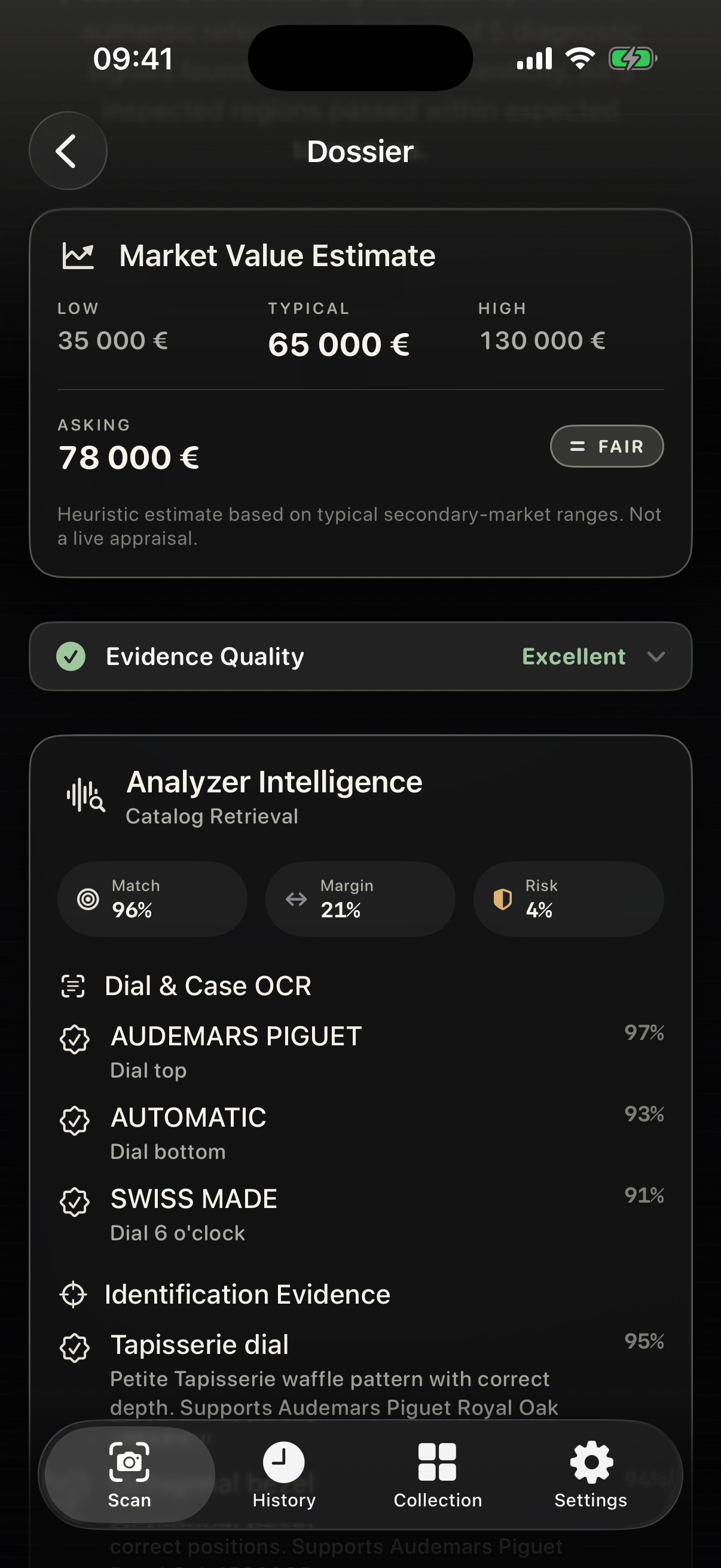
When you scan a watch, WatchRadar suggests the likely reference and shows an estimated secondary-market value range for it: a low, a typical and a high figure. If you enter an asking price, it appears next to that range, so you can see at a glance whether the price looks in line, high or low for the reference.
That range is context, not an appraisal. It reflects typical secondary-market prices for the reference, and it cannot account for everything a specialist would check in hand: the condition of the movement, a service dial, polishing the photos do not show, a rare variant, or where the market is this week. Use it to decide whether a price deserves a closer look, then confirm it against sold prices.
How to estimate your watch’s value in 5 steps
Identify the exact reference
Find the reference on the papers, the caseback or between the lugs, or scan the watch with WatchRadar for a suggested reference. Note the dial, bezel and bracelet variant too, since they can change the value within one reference.
Grade the condition honestly
Inspect the case edges, crystal, bezel, bracelet stretch and clasp in good light. Note polishing, dents and any parts you know were replaced. Be as critical as a buyer would be, because a buyer will be.
Gather the set and the history
Collect the box, warranty card, booklets, spare links, purchase receipt and service papers. A complete, documented watch sits higher in the range than the same watch on its own.
Compare sold prices, not asking prices
Find recent completed sales and auction results for the same reference, in similar condition and with similar accessories. Discard the outliers and note the spread. That spread is the realistic range for your watch.
Choose how you will sell, and adjust
A private sale can get closer to the top of the range but takes longer and carries more risk. A dealer purchase or trade-in is faster and lower. Consignment sits in between, minus a commission. Pick the route first, then set your number.
Selling routes and what they mean for your price
| Route | What you usually get | Trade-off |
|---|---|---|
| Private sale | Closest to full market value | Slowest; you handle buyer vetting, payment and shipping risk yourself |
| Online marketplace | Near market value, minus seller fees | Fees, time and fraud attempts; buyers expect detailed photos |
| Consignment with a dealer | Market value minus the dealer’s commission | Can take weeks or months; read the contract terms carefully |
| Dealer purchase or trade-in | Below market value | Fast and simple; the discount pays for the dealer’s risk and margin |
| Auction | Market value, occasionally more for rare pieces | Seller’s commission, long lead times, and the lot may not sell |
What to gather before you sell your watch
- The watch, running, with the time and date set. Wipe it clean, but do not have it polished.
- The original inner and outer box, if you still have them.
- The warranty card or Certificate of Origin, booklets and hang tags.
- The purchase receipt, which also documents provenance.
- Service receipts with dates and the name of the service centre.
- Spare bracelet links, plus any original parts replaced during service, such as an old dial, hands or bezel insert. On vintage watches, the originals can matter more than the replacements.
- Clear photos: the dial straight on, both sides of the case, the caseback, the clasp and the papers, with the serial blurred in anything you post publicly.
- The reference, and a short, honest description of the condition and any work done.
Buying? Use value as a warning light
Value cuts both ways. If you are buying, an asking price well below the realistic range is a warning sign, not a bargain; it is one of the oldest patterns in counterfeit and stolen-watch sales. Compare the price with sold results, work through the buyer’s walkthrough and the Chrono24 checklist, and read the brand guide, such as Rolex or Omega, for the details worth inspecting.
Once the watch is yours, keep its reference, photos, receipts, service history and value context together in the collection box, so the paperwork is ready the day you sell or insure it.